The Evolution of Tools: Towards Design Intelligence
Design tools have traditionally represented design as pixels and rectangles — things that look like the outcome but aren't it. We're finally ready for something smarter.
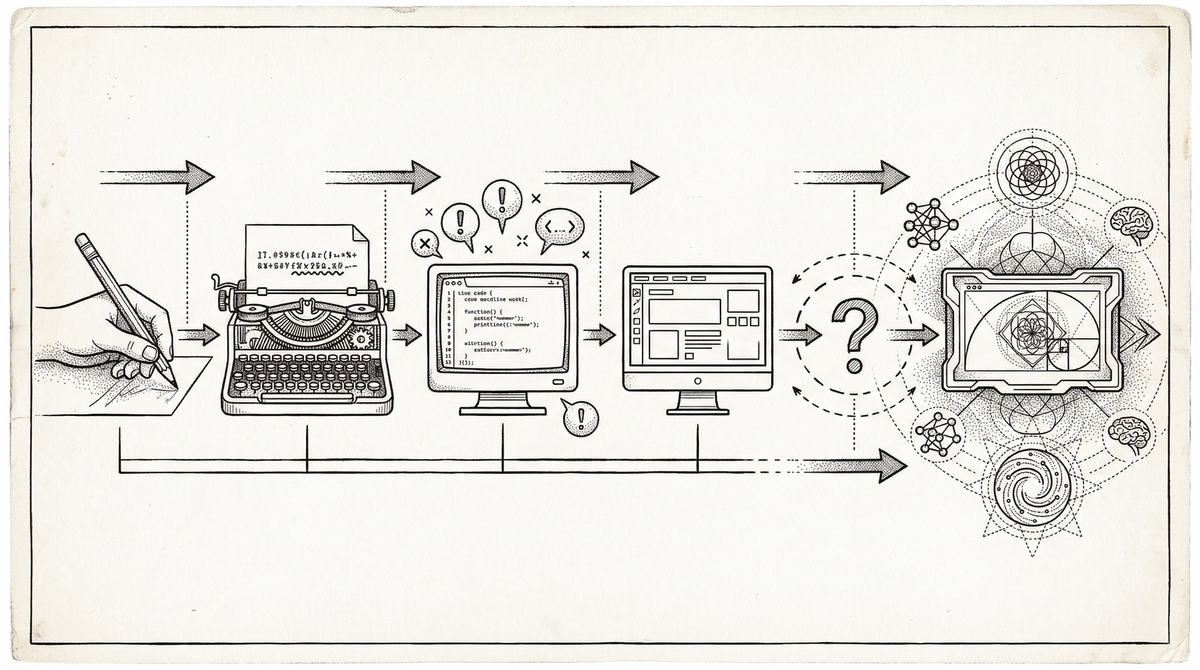
We’re at an exciting point in the evolution of design tooling. Other disciplines have had computer-aided tools that correct grammar, rewrite code, and analyze structural integrity of 3D models for some time. Now, with design tooling that’s open, connected, and extendable, we’ve laid the groundwork necessary to provide similar smart tooling for the design process.
Digital product design tools have traditionally represented design as a series of pixels and rectangles—things that look like the desired outcome, but are actually static images of what an interface will eventually become. Once a design is ‘finished’, an engineer must laboriously translate the pixels to code. Important to note: these pixels don’t contain semantic information about what they represent.
As a designer and maker of tools for designers, I find this consistently frustrating. While going about our work, it’s normal to say or hear, “I’d like to see our current landing page with a large video instead of that carousel.” The utopian world in my head says that’s the most we should need to reason with machines—that an expression of design intent (via speech, thought, or interpretive dance) transforms the design into what we want. But today’s workflows have us translating densely-encoded product representations into graphical representations through constant clicking, dragging, and nudging.